
The New Era of VAG Security: Understanding SFD2 and UNECE Protection
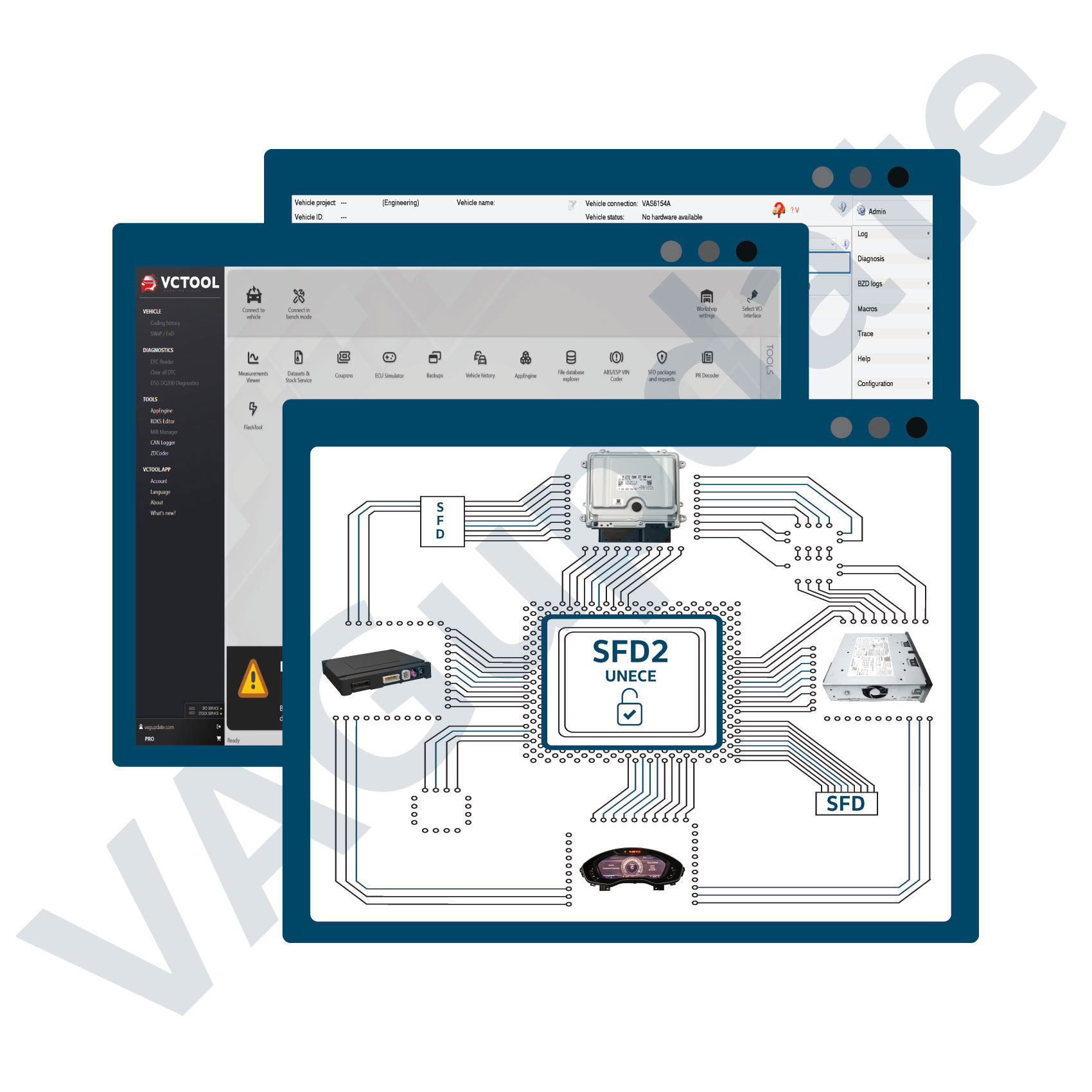
If you own or work on a 2024 or newer Volkswagen, Audi, Seat, or Skoda, you’ve likely hit a digital brick wall. You plug in your diagnostic interface, open your software, and try to perform a simple adaptation or coding—only to find that even the "old" SFD unlock isn't enough.
Welcome to the era of SFD2.
At vagupdate.com, we’re staying ahead of these changes to ensure you don’t lose the ability to customize and maintain your vehicle. In this post, we’ll break down what SFD2 is, why it exists, and how you can bypass it safely.
What is SFD2?
SFD2 (Schutz Fahrzeug Diagnose 2) is the successor to the original SFD protocol introduced in 2020. While SFD1 was primarily about logging who accessed the car, SFD2 is a direct response to the new UNECE R155 and R156 cybersecurity regulations.
These international regulations mandate that vehicle manufacturers implement robust protection against cyberattacks and unauthorized software manipulations. For VAG vehicles produced from early 2024 onwards, this means:
SFD1 still protects basic diagnostic access (reading/clearing codes).
SFD2 now protects writing privileges (coding, adaptations, and parameterization).
The UNECE Connection (R155 & R156)
The United Nations Economic Commission for Europe (UNECE) introduced these standards to ensure that modern, "connected" cars are safe from hacking.
R155 focuses on the Cyber Security Management System (CSMS).
R156 focuses on Software Update Management Systems (SUMS).
For the end-user, this translates to a vehicle that is "locked" by design. Without a specific, manufacturer-signed digital TOKEN, the car’s ECU will simply reject any changes you try to write to it.
How is SFD2 Different from SFD1?
The main difference lies in the complexity of the handshake. In SFD1, you could often get a 90-minute "open window" for the entire Gateway. With SFD2, the protection is much more granular. It often requires specific tokens for specific Data Identifiers (DIDs).
The Workflow for SFD2 usually looks like this:
- Unlock SFD1: You must first unlock the Gateway using an SFD1 token.
- Collect Data: Use a tool like VCtool to collect the specific "Challenge" data from the ECU you want to modify.
- Request SFD2 Token: This data is sent to a server to be signed.
- Write Changes: The resulting SFD2 Token is entered into the software to authorize the write command.
How Can You Unlock SFD2?
For a long time, this was only possible via official dealer ODIS online connections. However, at vagupdate.com, we now offer a professional SFD2 Unlock Service.
By using our service alongside tools like VCtool and a VAS6154 or ENET cable, you can generate the necessary tokens to bypass these restrictions. This allows you to continue performing retrofits, enabling hidden features, and adjusting adaptations on the latest 2024+ models.
Conclusion
SFD2 is not just another "code"; it is a legal requirement for vehicle manufacturers that changes the landscape of DIY car coding. While it makes things more complex, it doesn't make them impossible. With the right tools and a reliable token service, your 2024 VAG vehicle remains as customizable as ever.
Need an SFD2 Token for your project?
Visit our SFD2 Unlock Service page here: https://vagupdate.com/sfd2-token to get started and get back to coding!

Comments